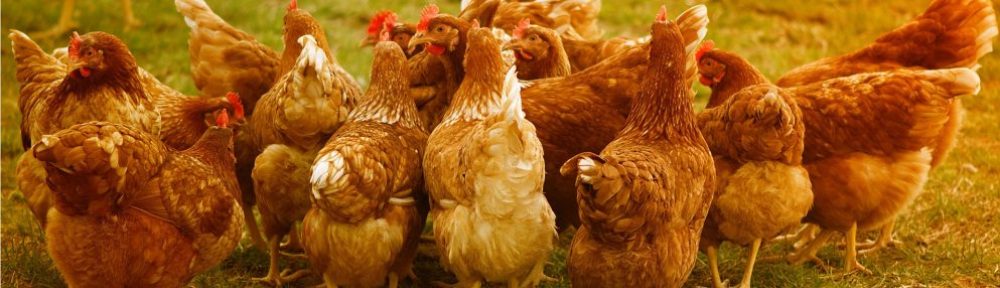
My name is Wyatt Wertman, I am the founder and owner/operator of Tikkun Homestead LLC. I was born and raised in the Pacific Northwest on a family farm where we raised Herford cattle for beef. As kids, my siblings and I grew up in a rural community and got into 4-H and FFA. My siblings were really invested in the sheep business and got me into the game with them. We primarily raised Shetland and Hampshire-cross sheep until we found the Shropshire breed. We traveled around the region and focused on our herd’s genetics, purchasing high quality ewes, breeding them with the best rams we could afford and raising the lambs for our primary annual 4-H projects, and sold the other lambs to other 4-H and FFA kids around. We were very successful in the shows, traveling around the region and winning both Fit-and-Show and Type classes. But I was never as personally invested in the sheep industry as my siblings – my passion went a different direction. See, on our family farm we also raised layer hens for eggs and broiler chickens for meat as well. Being homeschooled, my primary daily chores consisted primarily of tending to the flock of birds. That’s where my love of chickens really started.
Tikkun Homestead LLC has been my dream for years. It all started when I was a young teenager and on a family trip to Israel. I remember sitting on a hilltop and looking around at the waking desert and wondering how the land went from an agricultural gold-pot to the wasteland that Mark Twain described it to be. I understood some of the history and how different conquering empires had intentionally influenced this desertification, but looking out at the bare bedrock that protrudes from the hills and the eroded soil that is in the valleys, I wondered what it looked like about a thousand years ago when it was a sort of island of fertility in the middle east. I started to think about ways that the erosion and desertification could be reversed, and I remember frustratingly noting to my friend nearby that it didn’t seem like very many people were trying to do this. That’s when my friend told me “You can’t complain about a problem if you don’t try to fix it”.
After this, I started researching, learning and experimenting back at the family farm. My goal was always to do some sort of agricultural work, because that’s where my heart has always been focused. After that trip to Israel, it seemed a bit more purpose driven. Tikkun Olam (insert link to Tikkun Olam blog post). The idea of repairing the world in every way, starting with yourself and your home and moving wider. If you see an issue, try to fix it. But you can’t influence change if you don’t change yourself first. This idea is what ended up fueling my life’s mission. To own a profitable farm and use holistic and regenerative agricultural practices in order to enable natural systems to flourish, and in turn create a sustainable community while maximizing profitability; all this while helping to influence and teach others to maybe follow in a similar direction themselves.
As I continued to study and research, I ended up taking a few business classes at my local community college. I realized that I really did not like college, and probably wasn’t built for a white collared job either. So I ended up getting a job as a plumbers apprentice. I enjoyed the work and did well for myself in the field, and after a couple years of plumbing I had a realization. I was essentially just waking up, going to work, coming home, going to bed, and rinse and repeat. I liked the job, but I didn’t see any long term benefit from the work I was doing. It was a means to and end; a way to make money to survive in order to work so I could make more money and the cycle continued. The thought of being an old man and looking back at what I accomplished in life, and not seeing any real difference in the world as a result of my existence worried me.
One day I had a bad day at work. Everything just went wrong that day and I was flustered. On my drive home I decided to go to the Army Recruiter and chat with them for a bit. They of course tried to get me to sign up that day, trying to sell me on any random job that they had. I talked with some people who had experience in the military and in the realm, and they helped me to ask the right questions. I decided that I wanted a specific job in the military (MOS – Military Occupational Specialty). So after six months of bugging my recruiter for the job, he finally found an opening. I joined and shipped out to my training pipeline. At first I loved being in the military, it was good to me and I was good in it. But it wasn’t fulfilling. I realized that you can take the boy from the farm, but you can’t take the farm out of the boy. No matter where Uncle Sam sent me, I made a point to improve the local eco system as much as I could, starting gardens, planting trees and raising chickens. It was difficult to juggle at times, because when you have animals or even just a garden that rely on you to keep them alive, you have to get creative when the military sends you away or moves you around.
I ended up at Fort Campbell, Kentucky. Fort Campbell is a fantastic place, right on the Kentucky/Tennessee border and I ended up with a beautiful house on the Tennessee side, about a half hour from post and in a fantastic neighborhood. The neighbors all loved my chickens and would come to the fence to talk about the garden and any of the random projects I would be doing. For me, it was a hobby and a way I could drive toward what I felt was my purpose in some way. I will say that my chickens were some lucky spoiled birds. I purchased a tin shed from the hardware store and modified the interior. I had to dig it into the side of a hill as my property slopes down to the Red River, so I spent a week with a shovel and pick axe leveling the terra rosa clay and bed rock, building the shed and putting up the chicken yard. I learned that those pre-packaged sheds are incredibly difficult to build, especially by yourself. But it was worth it.
I went out and bought some ISO Brown chicks and raised them. I ended up piling up shavings and straw in the center of their yard, and pouring all my kitchen waste on the compost pile. I bought some kitchen composting pots and gave them out to co-workers and friends with the deal that if they filled their compost pots up with kitchen waste and brought it over for my birds, I would trade them the kitchen scraps for a dozen eggs. The only rule was that if it was once alive in any way, it could go in the compost pot. I would ferment some bird seed and sprinkle that on the compost pile daily with some ground oyster shells. I did supplement with normal layer feed, just to fill any nutritional gaps for the birds, but they hardly touched the commercial feed. Watching the chickens natural instincts, I realized that they love to dig, scratch and peck in the compost. The compost attracted bugs and worms which would help to transform the pile into compost, and the chickens would spend the day picking through any scraps in the pile and hunting the bugs. They would eat what they needed, digest it and poop the rest out into the pile, and the scraps and seeds they didn’t eat would either decompose into compost, or sprout and the chickens would eat the sprouts. Then the chickens would dig and throw the compost around, aerating and mixing the pile, and I would go in every week with the shovel and restack the pile. The ladies loved the compost mixing day because it would expose all the bugs and some kitchen scraps that they had buried. This resulted in remarkably healthy hens, tons of eggs and an incredibly rich composted manure pile. Every October I would shovel out the composted manure into a separate aerated pile and replace the composted manure with fresh wood chips, shavings, sawdust and straw. After testing the first year’s composted manure in the aging pile, I realized that I could add some basic things to the chicken’s pile and make it even better. I added some rock dust, sand and would add some fish manure when it needed a boost of nitrogen. It ended up all going on my garden and being spread on my lawn, and I have never seen such results! That’s when the idea clicked, I could do this but on a large scale! But I was still in the Army.
After some rough experiences on deployment, I decided to give the Army another chance. I re-enlisted again for as short of a commitment as I could and deployed again. I figured that if the Army proved itself to me again, I might consider staying in for my career. But if it had the same results, I would just not re-enlist and ride out my time honorably. Well, I ended up deciding to not re-enlist. It was a tough decision, because eight years is a long time to be committed to something and then walk away from it. But I was excited because I could pursue what I felt like my purpose was. And that is the conception of Tikkun Homestead LLC.
As I’m writing this, I am jumping in to the concept with both feet. Sink or swim, I’m committed to transforming this childhood dream into a successful reality. I’m working to producing quality eggs and soil amendments while inspiring a community of individuals to come and learn with me, take my ideas and experiences, change them and make them your own. At Tikkun Homestead LLC, I will create a sub-brand named Holistically Grown (link to Holistically Grown blog post); this is the stamp that we will use on Tikkun Homestead’s products which will let the consumer know that what they are purchasing was produced in accordance with our core values. Our farming practices are designed to create a harmonious and nurturing environment that encourages the natural instincts of our animals while promoting their overall well-being. Let’s discover together – because together, we can make this world a better place one heart at a time.